
Maybe that word feels like it belongs to someone else - someone with more walls, more money, more expertise. It belongs to you. A collector simply chooses to live with a piece that moved them. That is the whole qualification.
Imagine a home filled with pieces that carry you toward peace, joy, introspection - each one a different feeling waiting in a different room. If a piece stopped you, made you look twice, made you feel something you couldn't quite name - you have already begun.
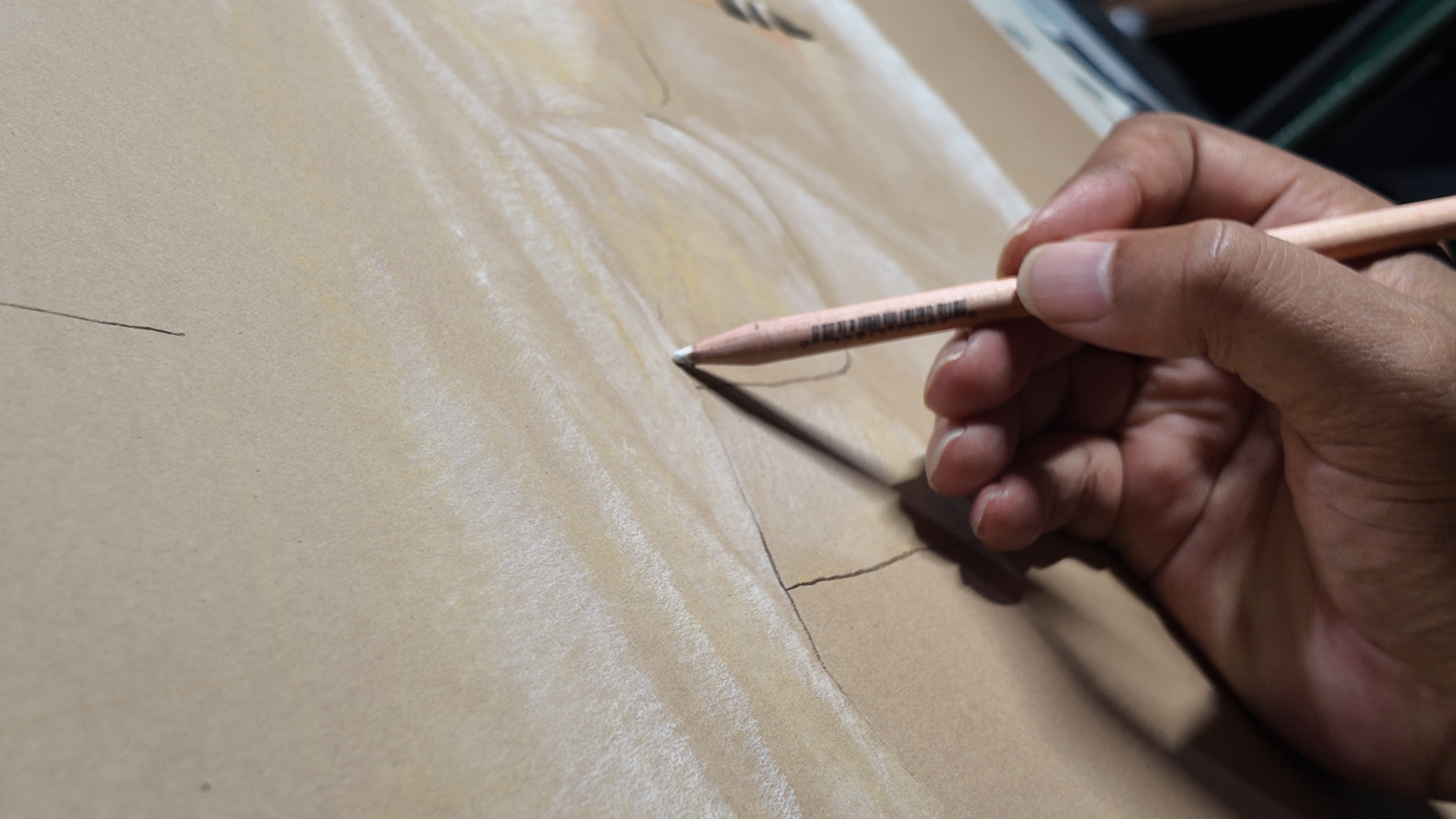
When you choose an original, you choose the feeling itself - captured in the actual marks of the hand that made it. Every piece here stands as one of one. No second version exists. No duplicate waits somewhere to be made.
Start with the piece that refuses to leave you alone. The one you keep returning to days later, the one that occupies a corner of your mind without permission.
Reach out and start a conversation. If the piece you love already lives in someone else's collection, ask anyway - a commission sometimes opens exactly the door a finished work cannot. No formal process exists here. No application. Just a conversation and a decision to let something in.
Living with a piece transforms your experience of it. The painting on your wall today carries different weight in five years - not because the canvas changes, but because you do.
Different techniques carry different needs. A toothbrush and spatter piece built up in layers on black canvas, a palette knife work, an oil pastel - each asks something specific of the space it inhabits, the light it sits under, the way it should be framed and maintained. None of it requires expertise.
All of it rewards attention.
Every significant collection began with one piece and one moment of recognition. Trust that moment. Reach out. Let the work lead you somewhere you did not expect to go.
Whatever brings you to the work — let it lead you somewhere deeper.